There are more than a hundred million people added to the global population count every year. And as this number keeps increasing, the need to provide quality healthcare services is no less.
However, continuous staffing of healthcare workers cannot perfectly fill in the gap for these demands. This is why hospitals, community clinics, and other healthcare departments need to automate their services.
Here is a walkthrough of what automation means and how it can help the healthcare industry.
What Is Healthcare Automation?
Healthcare Automation refers to the integration of modern technology and artificial intelligence (AI) tools into the healthcare system. It is, however, important to note that there is more to automation than the use of robots.
Document management systems, administrative software, and robust central databases are all non-robotic components that can expedite several healthcare processes on a more accurate scale.
With the integration of these tools, healthcare professionals can render quality services with lesser effort.
6 Ways Healthcare Industries Can Benefit From Automation
Modern technology and exceptional AI tools make it possible for healthcare providers to hasten up and simplify several processes. This includes faster data retrieval, early diagnosis with neural networking, and automated scheduling.
The healthcare industry can benefit from automation in the following ways:
1. Early Diagnosis Of Diseases
With the evolution and adoption of AI tools for medical diagnostic purposes, terminal diseases like cancer and cardiovascular disorders can be detected earlier. AI tools utilize the collection of both genetic and physical data in determining the risk factor for a particular disease in patients.
Recently, neural networking was used to highlight the presence of breast cancer in a patient through gene sorting and results from a mammogram test. The combination of several other factors, like symptoms, past or current medications, traits, and real-time metrics, is all used for effective automated diagnosis.
In turn, the time spent on diagnosing patients through manual processes is reduced. And patients can be treated earlier before the disease worsens.
Moreover, this practice of diagnosing diseases based on physical data is also utilized by several skin care analysis apps.
Automated Scheduling
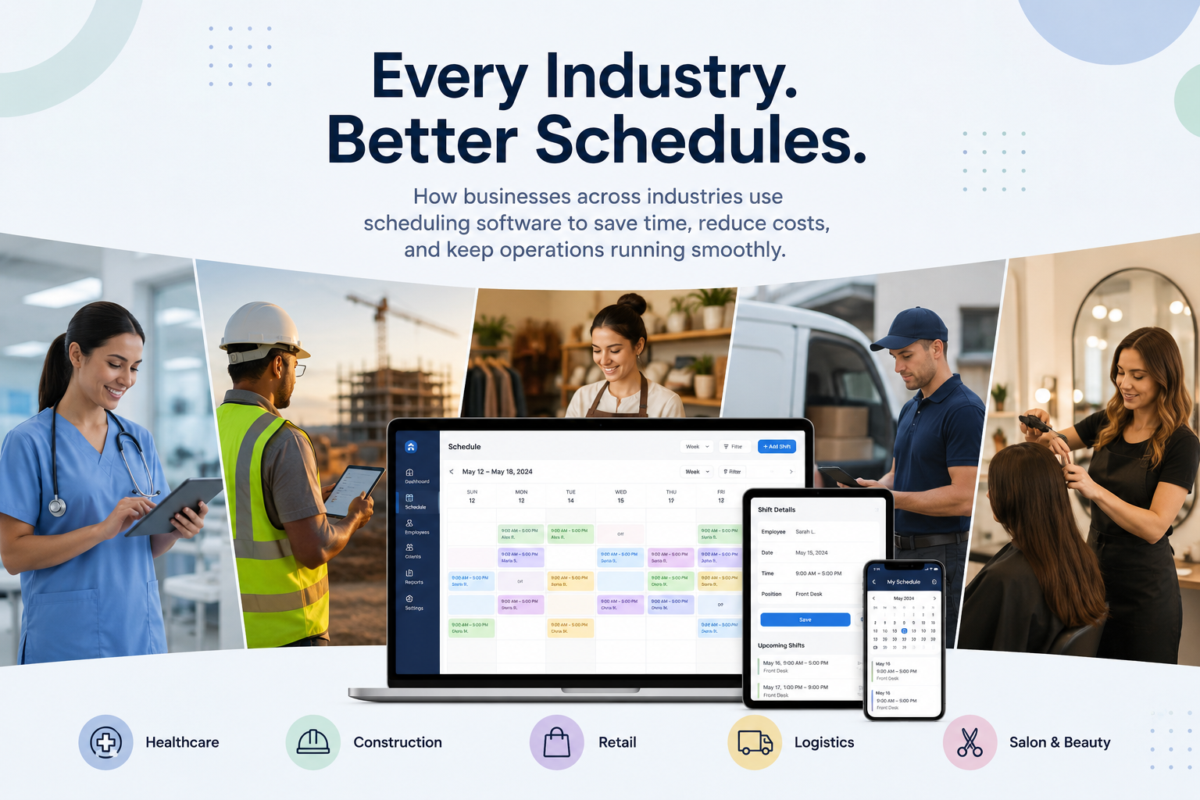
Automation helps healthcare professionals schedule meetings with patients without having to fill out paper files. Automation helps healthcare professionals schedule meetings with patients without having to fill out paper files—which is especially beneficial for itinerant workers, such as traveling PTs who frequently move from location to location and need to keep their meetings organized.
Several medical scheduling programs can automatically send appointment details and schedule reminders to patients.
Healthcare practitioners can also manage billings for patients and submit insurance claims based on real-time treatment data.
3. Data Access And Privacy
With the use of electronic medical records (EMR) and electronic health records (EHR) software, healthcare providers can easily access patients’ data across offices. These programs are offered as desktop software and are also available to authorized users online.
Importantly, stored data is securely encrypted and automatically backed up to prevent data loss and public exposure. The implementation of a top healthcare CRM further enhances the efficiency of managing patient information and streamlines communication among healthcare professionals.
Improved Delivery
Due to rapid technological breakthroughs, repetitive manual tasks such as retrieval of patients’ files, scheduling appointments, central access to medical records, conclusive diagnosis, and drug dispensing can now be easily automated.
The result? Medical practitioners and other healthcare workers are exempted from the usual brain drain. At the same time, there is increased efficiency and enhanced work productivity.
Many believe that automation will reduce the need for medical practitioners. In contrast to this, effective cooperation between humans and intelligent machines will yield better healthcare delivery.
Cost Effective
Healthcare automation eliminates the need for data entry tools like Excel, which is used for employee onboarding. Several other logistics and repetitive manual tasks that cost the industry more money are easily resolved.
Patients also find it easy to adjust their schedules or book an appointment online without having to personally visit the hospital. This leads to increased satisfaction and lowers patient acquisition cost.
Automation improves affordability. Since AI tools are capable of detecting diseases earlier, healthcare providers can attend to patients and initiate treatment immediately. In turn, the huge cost of treatment that could have resulted from a late diagnosis is avoided.
Minimized Errors
Administrative errors are very common in the healthcare industry. Due to the never-ending stream of patients, health practitioners can make clerical and record errors. These errors, regardless of how little they are, can cause serious problems, especially in the healthcare system.
Automation, however, helps to minimize the occurrence of such mistakes and improve the quality of care received by patients.
Sometimes, health providers might prescribe contraindicating drugs to patients or administer inaccurate treatments. AI tools can, however, assist in prescribing the right drug after a thorough comparison with millions of other drugs to avoid contraindication.
Conclusion
The healthcare industry stands to gain more through a streamlined workflow model that is aided by automation. Moreover, an automated system can ensure that physicians and other health workers provide sufficient care to patients.
With the continuous advancement in technology, the rate of mortality due to late diagnosis and poor treatment will also reduce significantly.