

In today's fast-paced digital world, people expect seamless experiences at every touchpoint—including when they book appointments and pay for services online. Smooth payment integration isn't just a technical necessity; it's vital for building trust, reducing no-shows, and growing your business. If you're using Bookafy or considering adding payment processing to your appointment booking workflow, it's important to get it right from the start. Let's explore the best practices that ensure your payment integration is not only efficient but also secure, reliable, and customer-friendly.
Prioritize Security and Compliance

When handling financial transactions, nothing matters more than keeping your customers' data secure. Payment processors handle sensitive information like credit card numbers and personal details, making them prime targets for cybercriminals. Your responsibility is to make sure every transaction is safe.
Choosing a reputable payment gateway is a foundational step. Well-known providers are compliant with the latest Payment Card Industry Data Security Standard (PCI DSS), which is a must-have for anyone handling payments. PCI compliance isn't optional—it's legally required in many regions to process card data securely. That means encrypted transmission, regular security audits, and safe storage practices.
Don't forget about Secure Sockets Layer (SSL) certificates, which encrypt data between your website and your customers. Without SSL, browsers may warn users that your site is unsafe, which can scare off potential clients before they even book.
Pro tip: Regularly update your booking platform and payment plugins to patch security vulnerabilities. Outdated software is an easy target for hackers.
Deliver a Seamless User Experience
Nothing frustrates a customer more than a clunky payment process. If your booking system is slow, confusing, or requires too many steps, you risk losing bookings at the final hurdle.
Integrate payments directly into your appointment scheduling flow, so users never have to leave your site or app. Look for platforms like Bookafy that offer built-in payment integration with popular gateways, making the process smoother both for you and your customers.
Keep forms simple and only ask for essential information. Each extra field increases the chance of drop-off. Use clear progress indicators so customers know how many steps remain. If possible, offer guest checkout options in addition to account creation for returning clients.
Pro tip: Test your payment flow on both desktop and mobile devices. The majority of bookings are now made on smartphones, so mobile optimization is key.
Support Multiple Payment Methods
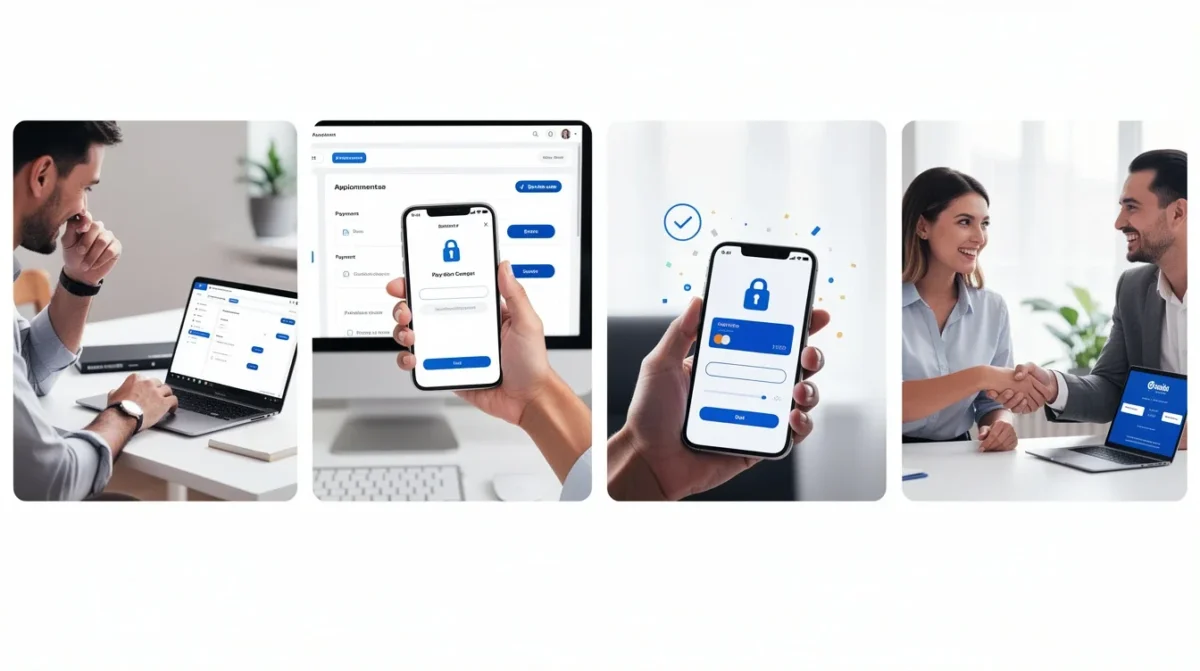
People have different preferences when it comes to paying. Some stick to credit cards, while others prefer digital wallets, bank transfers, or even buy-now-pay-later services. The more options you offer, the more convenient it is for customers to book and pay.
Start with the basics: major credit and debit cards. But don't stop there—consider integrating Apple Pay, Google Pay, PayPal, or even region-specific payment options if you attract international clients. Flexibility can be a deciding factor for someone on the fence about booking with you.
Keep in mind that different payment methods may have different processing times and fees. Be transparent with your customers about any additional costs, and factor these into your pricing strategy.
Pro tip: Regularly review your payment analytics to see which methods your clients prefer. You might discover an opportunity to streamline or expand your offerings.
Automate Receipts and Notifications
After a payment is made, customers expect immediate confirmation. Sending automated receipts builds trust and reduces anxiety about whether their booking and payment went through.
Set up your system to send instant email or SMS confirmations that include appointment details, payment amount, and a transaction reference. Not only does this reassure your customers, but it also reduces the number of support inquiries you’ll need to handle.
Automated reminders leading up to the appointment—especially if they include payment status—also help minimize no-shows. Some platforms, like Bookafy, allow you to customize notifications for different appointment types, making communication more personal.
Pro tip: Include a “manage my booking” link in every confirmation so clients can reschedule, cancel, or update their payment details without needing to call you.
Make Refunds and Cancellations Simple
No matter how well you run your business, cancellations happen. Maybe a client got sick, or maybe a scheduling conflict came up. How you handle refunds and cancellations can make or break your reputation.
Clearly state your cancellation and refund policy during the booking process. If you require payment up front, let clients know what happens if they cancel—will they get a full refund, a partial refund, or a credit toward future services? Transparency reduces disputes and builds trust.
Automate the refund process as much as possible. Most payment gateways integrated with appointment booking software can process refunds with a few clicks, saving time for both you and your customers. The easier it is for clients to get their money back (when appropriate), the more likely they are to book again.
Pro tip: Monitor refund requests for patterns. If you notice frequent cancellations at a certain time or service type, you may need to adjust scheduling or communication to address underlying issues.
Ensure Reliable Reporting and Reconciliation
Smooth payment integration isn’t just about the front-end experience. Accurate reporting behind the scenes is crucial for managing your business, reconciling payments, and preparing for tax season.
Choose a booking platform that provides clear, real-time reports on all transactions. This should include completed payments, pending payments, refunds, and chargebacks. Integrating your booking system with accounting software can also save hours of manual work.
Regularly review your reports to catch discrepancies early. Reconciling your booking records with your payment processor ensures that nothing falls through the cracks—whether that’s a missed payment or a duplicate charge.
Pro tip: Schedule routine financial reviews—weekly or monthly—to keep your records up to date and catch small issues before they become big headaches.
Conclusion
Integrating payment processing into your appointment booking system is a game-changer for both you and your clients. It streamlines operations, reduces administrative work, and enhances the overall customer experience. By prioritizing security, offering multiple payment options, simplifying the user journey, automating notifications, handling cancellations fairly, and maintaining accurate records, you’ll set your business up for long-term success. With Bookafy’s robust tools and a focus on best practices, you can make payment integration a seamless, trustworthy part of your service—helping you grow with confidence.
Try Bookafy free
Put online booking, automatic reminders, and calendar sync to work for your business. Free to start — no credit card required.
Start your free trial See how it works →Frequently asked questions
What is the best appointment scheduling software for a small business?
Bookafy is appointment scheduling software built for small businesses: clients book online 24/7, automatic text and email reminders cut no-shows, and your calendars stay in sync — at a friendly per-user price.
Does Bookafy reduce no-shows?
Yes. Bookafy sends automatic text and email reminders before every appointment, which is one of the most effective ways to reduce no-shows.
Can clients book online 24/7 with Bookafy?
Yes. Bookafy gives you a booking page and embeddable widget so clients can self-schedule any time, from your website, Google, or a shared link.
How much does Bookafy cost?
Bookafy is a simple monthly subscription with a free trial and no credit card required. See the pricing page for current plans.
Related: Appointment scheduling software · Why Bookafy · Pricing
Save time with automated scheduling
Bookafy handles online booking, reminders, and calendar sync so you can focus on the work.
Try Bookafy free
Bookafy — online appointment scheduling for growing businesses.