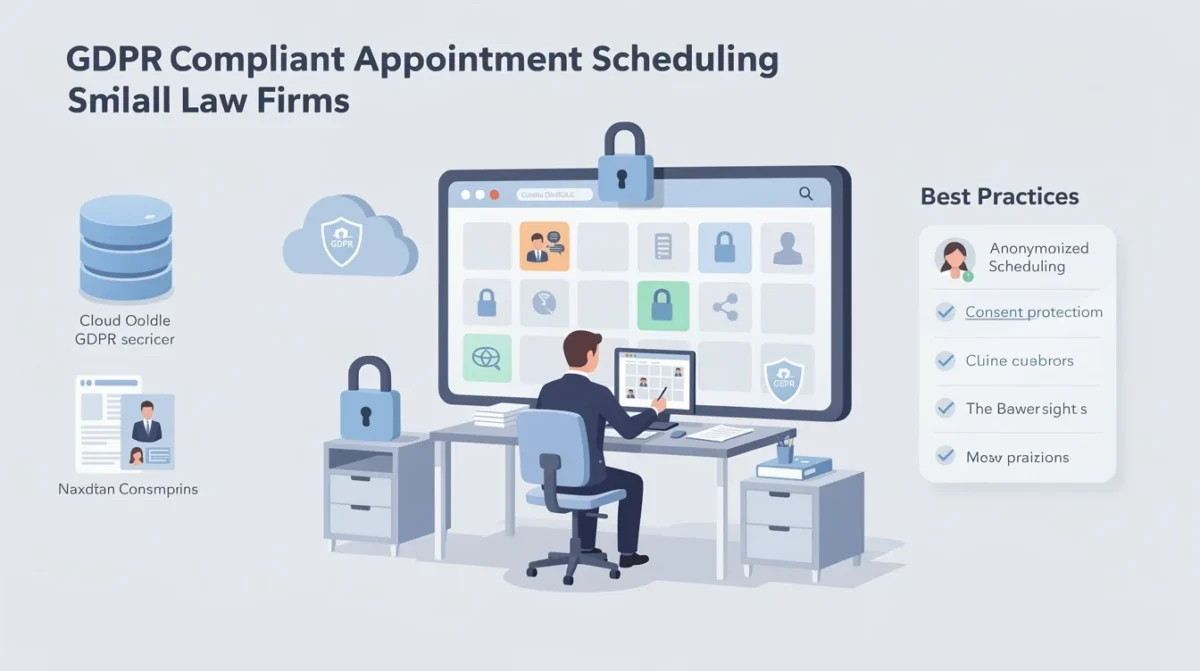

In today's digital world, small law firms face a growing challenge: how to deliver efficient, client-friendly appointment scheduling while staying compliant with data privacy laws like the General Data Protection Regulation (GDPR). With clients expecting seamless online bookings and legal practices handling sensitive personal data, the stakes are higher than ever. If you're a small law firm looking to streamline your scheduling process without risking GDPR violations, you're not alone. Let's explore how you can achieve both efficiency and compliance, ensuring your clients' trust and your firm's reputation.
Why GDPR Matters for Law Firms

GDPR isn't just another bureaucratic hurdle—it's a fundamental regulation that protects individuals' privacy across the European Union and beyond. Even if your law firm isn't based in Europe, if you serve EU clients or process their data, GDPR applies to you. The regulation mandates strict requirements around collecting, storing, and using personal data, including names, contact details, and case information—exactly the kind of data you gather when scheduling appointments.
Non-compliance isn't just risky; it can be costly. Penalties can reach millions of euros, not to mention the potential damage to your firm's reputation. But GDPR compliance is about more than avoiding fines—it's about showing clients that you respect and protect their information.
Pro tip: Regularly review your data handling processes, especially when you introduce new tech like online scheduling tools.
Key GDPR Principles to Understand
Before diving into appointment scheduling specifics, it's important to grasp the core principles of GDPR. These guiding rules ensure you handle client data responsibly:
-
Lawfulness, fairness, and transparency: You must have a legitimate reason for collecting data, and clients should know what you're collecting and why.
-
Purpose limitation: Only use data for the reasons you stated when collecting it.
-
Data minimization: Gather only what you need—no more, no less.
-
Accuracy: Ensure client details are correct and up to date.
-
Storage limitation: Don't keep data longer than necessary.
-
Integrity and confidentiality: Protect data against unauthorized access or loss.
In the context of appointment scheduling, this means being clear about what client data you request, why you need it, and how you'll keep it safe.
Pro tip: Include privacy notices on your scheduling forms that explain in plain language how you'll use clients' information.
Appointment Scheduling: Common Pitfalls

For many small law firms, the road to GDPR compliance is paved with good intentions and a few common missteps. The most frequent pitfalls happen during the appointment booking process:
- Collecting excessive data: Do you really need a client's full address or birthdate just to schedule a consultation?
- Lack of transparency: Clients may not know how their booking data will be used or stored.
- Insecure systems: Using outdated or unprotected scheduling software can put client data at risk.
- Inadequate consent: If you're using client data for reminders or marketing, you must get explicit permission.
These issues often arise when law firms adopt scheduling tools without considering GDPR from the outset. The result? Potential breaches, unhappy clients, and regulatory headaches.
Pro tip: Audit your current booking process—look at every data point you collect and ask, "Is this necessary for scheduling?"
Choosing a GDPR-Compliant Scheduling Tool
Selecting the right appointment scheduling software is crucial for both efficiency and compliance. Here's what small law firms should look for in a solution:
- Data hosting and security: The software should store data securely, ideally within the EU or an approved territory, and use encryption.
- Access controls: Limit who in your firm can see client bookings and details.
- Customizable forms: Only collect essential data, and allow clients to view or edit their information.
- Consent management: Built-in features for tracking client consent, especially if you send reminders or newsletters.
- Data retention policies: The ability to automatically delete old appointment data in line with your retention schedule.
A scheduling tool like Bookafy, designed with privacy in mind, can help you meet all these requirements without sacrificing usability.
Pro tip: Ask your scheduling software provider for a Data Processing Agreement (DPA)—it's a GDPR requirement when using third-party tools.
Building Trust Through Transparent Communication
GDPR compliance isn't just about ticking boxes; it's about building trust with your clients. When clients know their privacy is respected, they're more likely to book with confidence and refer others to your practice.
Transparency starts with clear communication. Explain how appointment data will be used, how long it will be stored, and who has access. Make it easy for clients to update or delete their information if they wish. If you use email or SMS reminders, be sure clients have opted in.
Pro tip: Send a welcome email after booking that outlines your privacy practices and gives clients an easy way to contact you with concerns.
Training Your Team on GDPR Best Practices
Technology is only part of the equation. Your staff play a critical role in ensuring ongoing GDPR compliance, especially when handling sensitive appointment data. Regular training helps everyone understand the importance of privacy and the specific steps they should follow.
Key focus areas for staff training include:
- Recognizing what constitutes personal data
- Following secure login and password practices
- Responding to client data requests or deletion inquiries
- Identifying and reporting potential data breaches promptly
Even the best scheduling software can't prevent human error, so invest in regular refreshers to keep data privacy top of mind.
Pro tip: Create a quick-reference GDPR checklist for your team to use during the scheduling process.
Conclusion
For small law firms, the balance between efficient appointment scheduling and GDPR compliance might seem daunting, but it's entirely achievable. By understanding the key principles of GDPR, choosing compliant scheduling tools like Bookafy, and fostering a culture of transparency and privacy awareness, you can protect your clients, avoid costly pitfalls, and set your firm apart as a trustworthy, modern legal practice. Staying proactive about compliance isn't just good risk management—it's great client service.